build your organizational chart
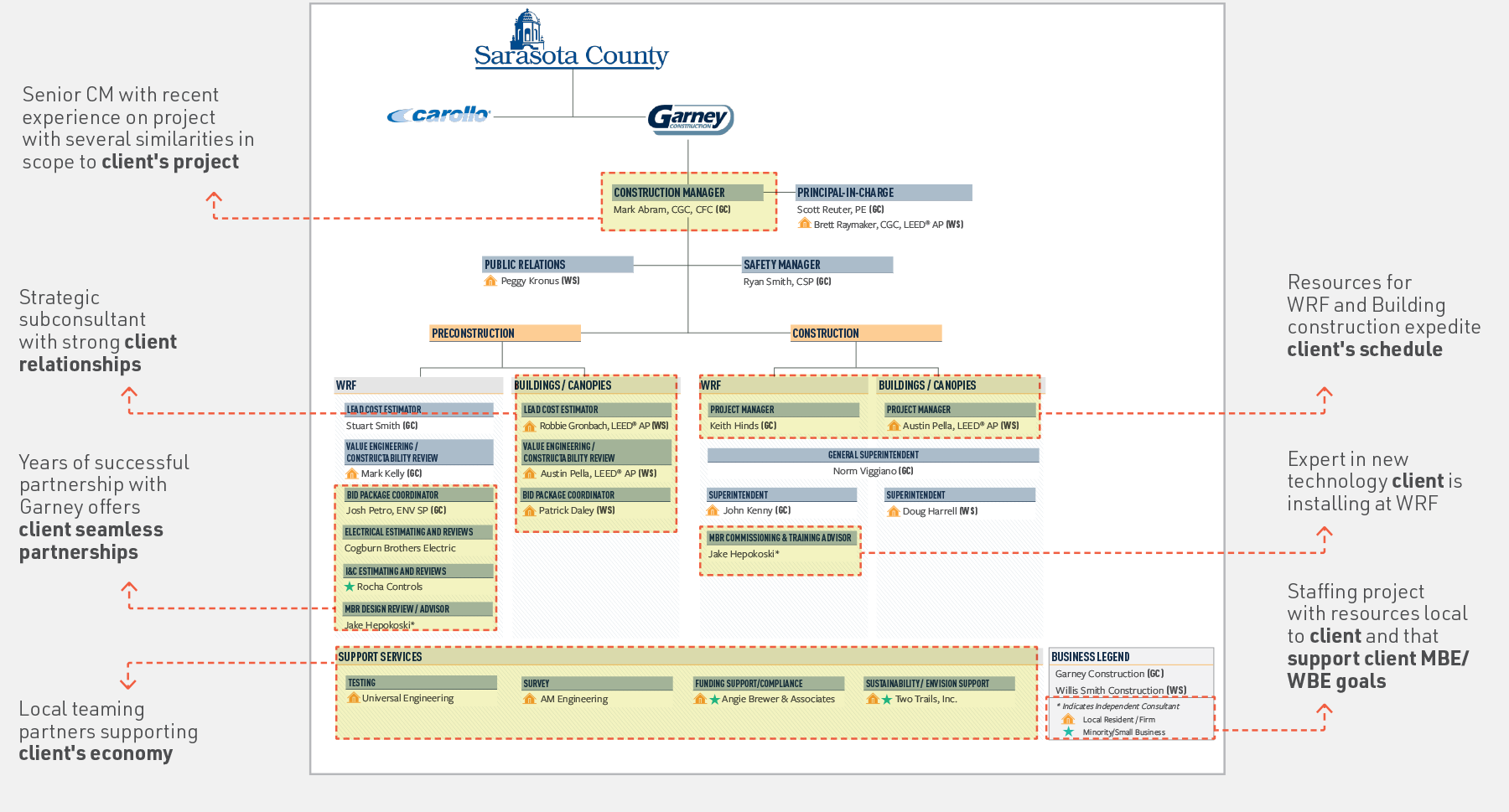
The ORGANIZATIONAL CHART is a tool that identifies which proposed staff members will work on the project and ensures project resources are available. Additionally, building an organizational chart forces the capture plan team to think about the varying needs, risks, and challenges of the project scope, and ensure that scope is met.
It also serves as a tool for the OPL and Marketing Lead to understand what “story” they are going to tell the client. In creating a unique story of why your proposed team was put together, you begin to develop differentiators and themes of why the client would want this team over others. As you are deciding roles and staff to fill them, think about who would be in an interview (if required) and how your selections will perform in the interview and what early training or coaching they may need.
As we refine the staff on our organizational charts, it is important that we build relationships between proposed staff members and client decision makers. Remember: clients want to work with people they like and trust, so capture planning is where we foster those relationships.
It is also important that we build our organizational chart around the client’s wants and needs. What is a successful teaming structure in the eyes of our client?
Do they prefer a team with ample staffing resources or a more streamlined team with fewer layers of management?
strategic teaming opportunities
The capture planning process is a pursuit of knowledge, and as the capture team gains more knowledge of project drivers, client hot buttons, and project challenges, the capture team may choose to add strategic teaming partners to the org chart. Strategic teaming partners suffice a need for the Client, whether that be a specialized scope of work, a minority business utilization goal, or trust in the form of an established positive working relationship.
When developing an organizational chart, it is important to think about the team members our competition may be proposing. What are strengths and weaknesses of our competitors’ organizational charts? If they are not locally based and our team is, then we can emphasize that. If our competitors offer services in-house that are outside of our capabilities, then we should consider adding a specialty subconsultant to our team.
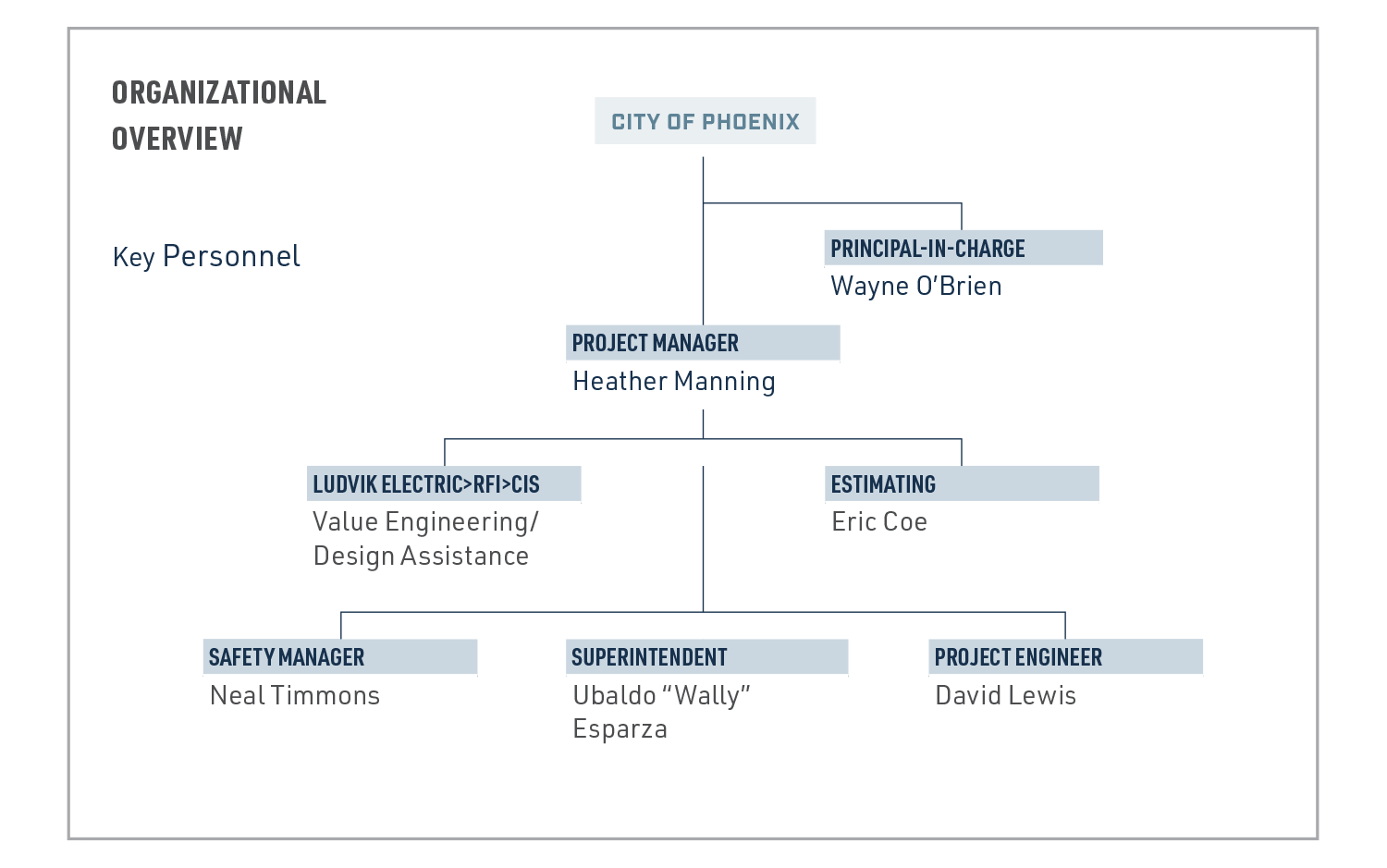
Q: Why did we build our organizational chart this way?
A: To support the client's goals and project vision.